

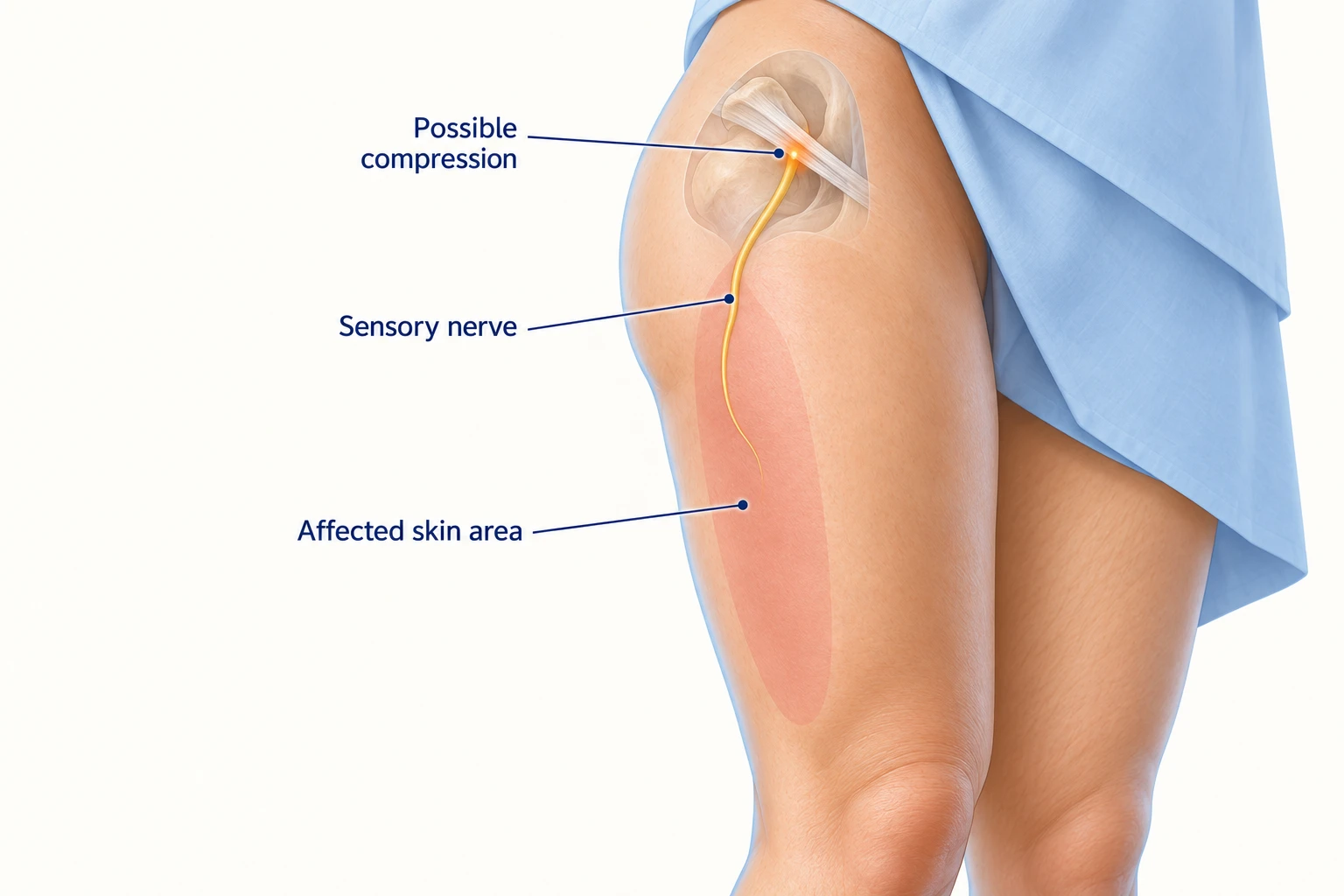
What is a focal sensory neuropathy?
A focal sensory neuropathy affects an individual nerve that carries feeling from a particular area of skin. Pressure, injury, or irritation can cause burning pain, numbness, tingling, or sensitivity to clothing and light touch. Symptoms may stay within a small patch rather than involve an entire arm or leg.
A purely sensory nerve does not control muscle movement. Weakness therefore needs assessment for a different or additional problem.
A common example: meralgia paresthetica
The lateral femoral cutaneous nerve supplies feeling to the front and outer side of the thigh. Compression near the inguinal ligament at the hip can cause a burning or numb patch, usually on one side. Tight waistbands, belts, changes in body weight, and certain injuries or operations may contribute. This nerve does not supply the lower leg or foot.
Other small sensory nerves can also become irritated after an injury, surgery, or sustained pressure. The location of the symptoms helps identify which nerve may be involved.
Is the problem in the spine or a peripheral nerve?
Symptoms can overlap with those caused by a nerve root in the neck or lower back. Both problems can occur together. Finding arthritis or a disc abnormality on an MRI does not, by itself, explain a particular patch of altered sensation.
Evaluation begins with the symptom pattern and an examination of sensation, strength, and reflexes. Depending on the findings, nerve conduction studies, electromyography (EMG), or ultrasound may help locate the problem or exclude other causes. Not every patient needs every test, and a normal test does not exclude every small sensory nerve problem.
How is it treated?
Care depends on the affected nerve and the source of irritation. Reducing pressure, adjusting clothing or aggravating activities, treating contributing medical conditions, and selected rehabilitation strategies may help. Medication may be considered when nerve pain interferes with sleep or daily activities.
For persistent symptoms, a targeted injection may help assess or treat the affected nerve. Surgical decompression is reserved for selected cases when appropriate nonsurgical care has not provided adequate relief.