

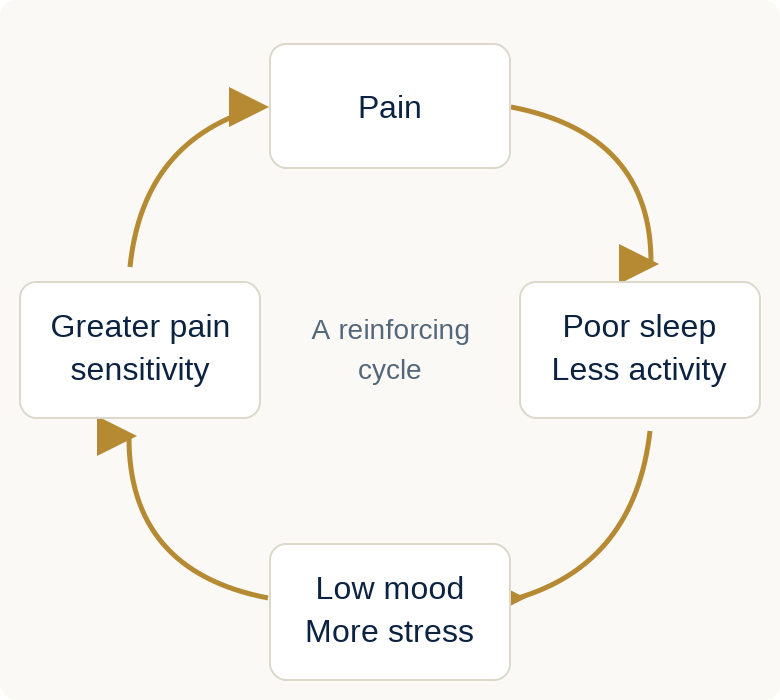
Persistent pain affects more than the area that hurts. It can interrupt sleep, make work difficult, reduce social contact, and leave you feeling discouraged. Depression and anxiety may develop alongside these changes. The relationship also works in the other direction: emotional distress can make pain harder to manage and interfere with recovery.
Brain networks involved in pain overlap with systems that process emotion, motivation, and attention. When you feel threatened or overwhelmed, discomfort may become more prominent. Low mood can also reduce the energy needed for exercise, appointments, or everyday routines. These influences are biological and behavioral; they do not make your pain less real.
A longitudinal study of people with persistent back, hip, or knee pain found that changes in pain and depression predicted subsequent changes in each other.[1] This supports asking about both problems during treatment. It does not establish that depression caused a particular person's spinal condition, or that everyone with chronic pain has a mood disorder.
Care can address several contributors together. Your clinician may discuss sleep, rehabilitation, social support, psychological therapy, or medication when appropriate. In a randomized trial involving patients with depression and musculoskeletal pain, optimized antidepressant treatment followed by pain self-management improved both depression and pain outcomes compared with usual care.[2] The treatment was a carefully coordinated program, so its results should not be attributed to one component alone.
Tell your care team if worry, irritability, sadness, or loss of interest is affecting daily life. These symptoms deserve the same attention as other physical limitations too. Meaningful goals might include meeting a friend, walking more comfortably, or returning to a valued activity. Progress may appear first in confidence and participation before pain intensity changes. Treating mood is one part of comprehensive pain care, alongside evaluating and treating spinal, nerve, or other physical contributors.