

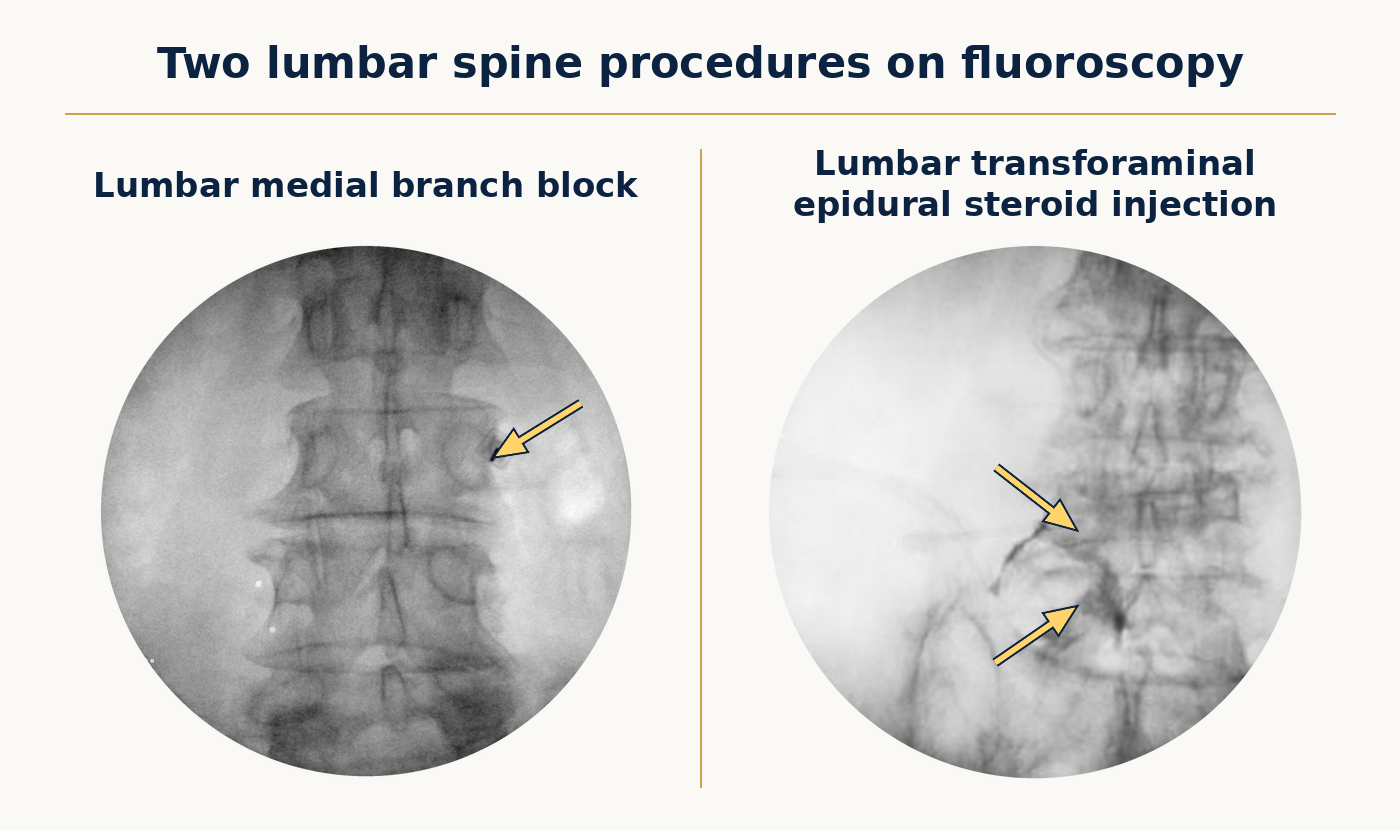
Two people can both say, “My back hurts,” and be offered different injections. One may have pain coming from the small joints at the back of the spine. The other may have pain traveling down the leg because a spinal nerve root is irritated. In some people, both problems contribute.
A medial branch block helps identify facet joint pain. Facet joints are small joints that help your spine bend and twist. During the block, a clinician places numbing medicine near the tiny nerves that carry pain signals from these joints. If your usual pain eases substantially while the medicine is working, that response helps your clinician judge whether the joints are contributing and whether radiofrequency ablation may be an option for longer relief.
An epidural steroid injection aims to ease pain from an irritated nerve root. A herniated disc, for example, can irritate a nerve root and cause shooting pain down the leg, sometimes with tingling. The injection delivers anti-inflammatory medicine into the epidural space around the spinal nerves. For this type of pain, relief is most likely in the short term, and the amount of relief varies from person to person.
Your clinician considers where your pain travels, what brings it on, what the exam shows, and whether the scan findings fit your symptoms. If you have both a low-back ache and shooting leg pain, describe each symptom separately. That helps you and your clinician agree on which symptom the injection is meant to address and what improvement to look for afterward.
References and further reading
- Cohen et al. Consensus practice guidelines on interventions for lumbar facet joint pain. Regional Anesthesia & Pain Medicine (2020).
- Armon et al. Epidural steroids for cervical and lumbar radicular pain and spinal stenosis. American Academy of Neurology systematic review (2025).
- Johns Hopkins Anesthesiology and Critical Care Medicine. Epidural Steroid Injections.
Fluoroscopy image credits
- Medial branch block. Bakır et al., Life (2024), Figure 3A. CC BY 4.0.
- Transforaminal epidural steroid injection. Lee and Lee, Journal of Korean Society of Spine Surgery (2021), Figure 2A. CC BY-NC 4.0.
The panels were cropped and annotated for patient education. The two needles in the epidural panel were digitally removed.