

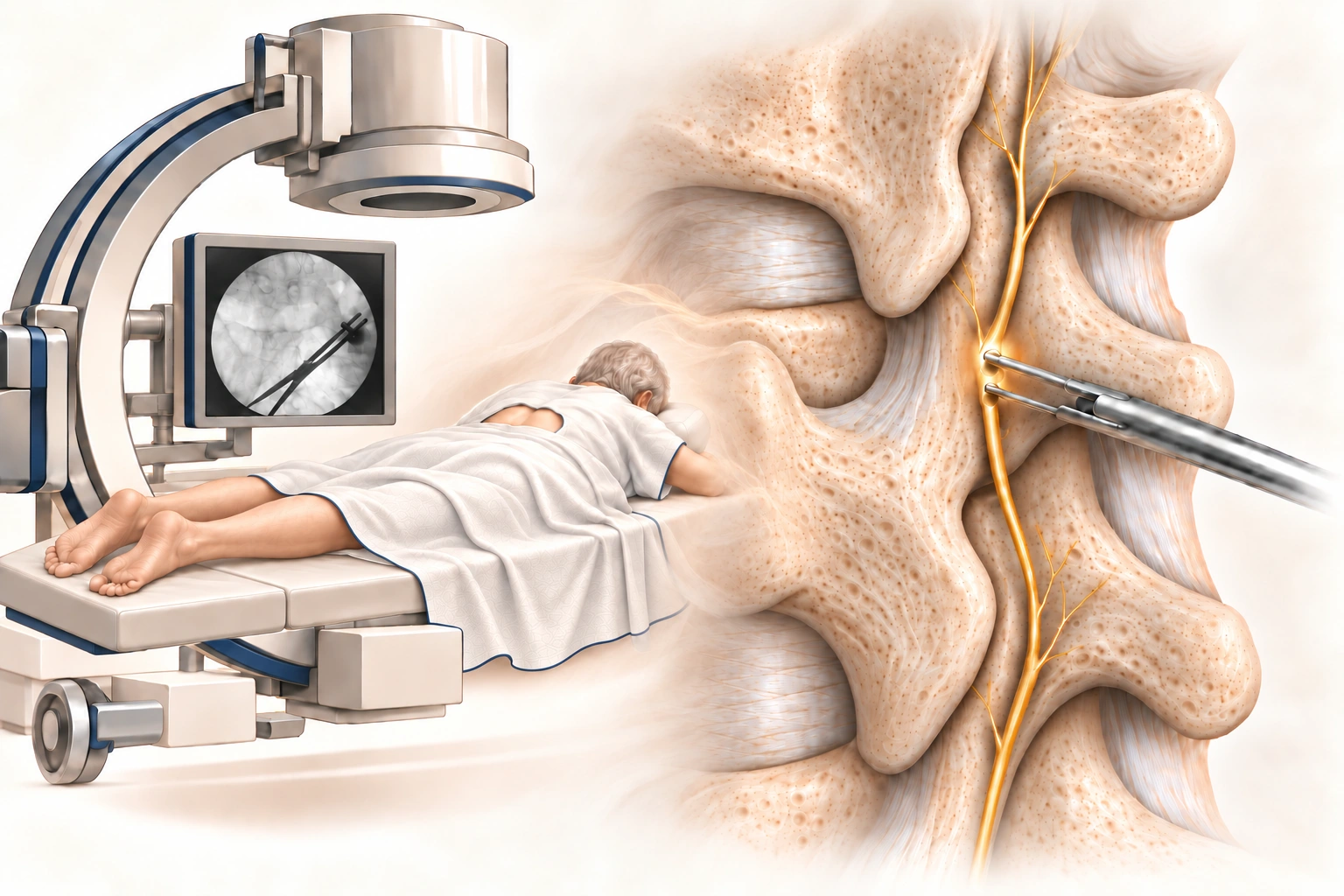
The small facet joints at the back of your spine can contribute to persistent back pain. Medial branch nerves carry pain signals from these joints.
Medial branch transection interrupts these nerves to reduce facet-related pain. Fluoroscopy—real-time X-ray imaging—helps the physician locate the bony landmarks used to guide the procedure. Diagnostic medial branch blocks help assess whether the facet joints are contributing to your symptoms.
How long can relief last? Relief after fluoroscopy-guided medial branch transection varies. Some studies of related rhizotomy techniques have reported benefit lasting 18–24 months, but long-term evidence for this specific approach remains limited. Results depend on the technique, patient selection, and other sources of back pain.
The goal is pain reduction and easier movement. Because back pain often has several sources, treating facet pain may be one part of a broader care plan.
Related research
Comparative study of medial branch rhizotomy and radiofrequency treatment. Pain Physician, 2022.
Randomized trial comparing lumbar medial branch neurotomy techniques. World Neurosurgery, 2019.
These studies used a different operative technique and do not establish the duration of relief after fluoroscopy-guided transection. Research checked October 11, 2026.