

You open your imaging report and read that one of the bones in your lower back has “slipped forward.” The phrase sounds alarming. What has moved, and what does it mean for your everyday activities?
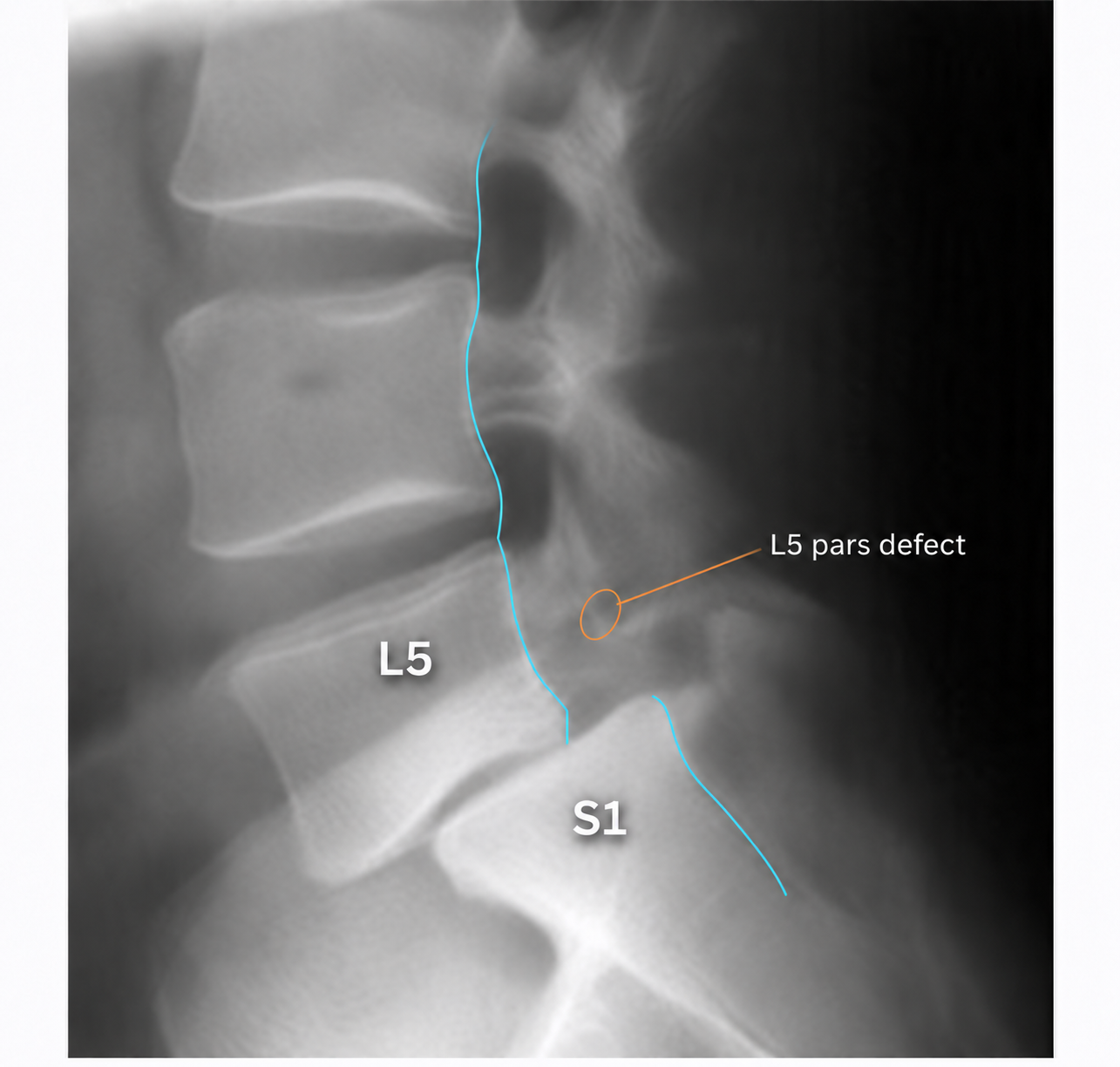
The medical term is spondylolisthesis. It describes one vertebra sitting farther forward than the bone beneath it. In adults, this can develop as discs and supporting joints change over time. Another cause is a stress fracture in a small bridge of bone at the back of a vertebra. [1]
Some people have a slip without symptoms. Others develop lower back pain, stiffness, or discomfort extending into the buttocks and legs. When nearby nerves are compressed, numbness, tingling, or weakness may occur. The finding needs to be considered alongside your symptoms and examination. [1]
Your clinician may recommend standing X-rays to assess alignment. Sometimes, additional images taken while bending forward and backward help show whether there is excessive movement. An MRI can help assess narrowing around the nerves. [2]
Many people improve with treatment that includes tailored exercise, physical therapy, and adjustments to activities. Surgery may be considered when symptoms remain disabling despite treatment or when nerve function is worsening. Decisions depend on nerve compression, stability, and how symptoms affect your life. [2]
Seek prompt assessment for new leg weakness. New bladder or bowel problems, especially with numbness around the groin, require emergency evaluation. [3]
At your next visit, ask, “Is this slip contributing to my symptoms, and is there evidence of instability?”
Read more in our Learning Center. Does Back Pain Mean I Need Surgery?