

When a weakened spinal bone fractures
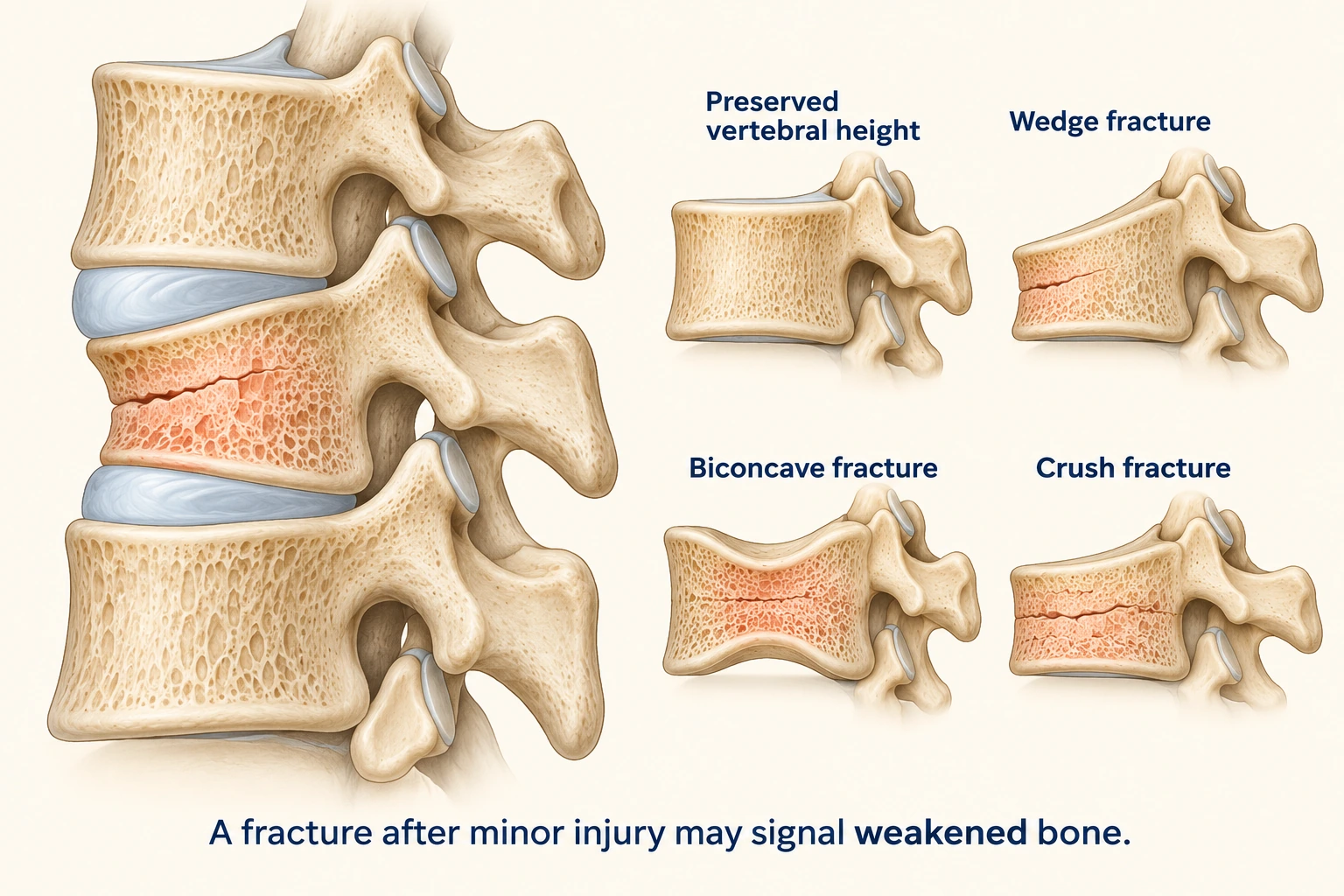
A vertebral fragility fracture is a break in a spinal bone after a minor fall, an everyday movement, or little apparent injury. The front of the vertebra may lose height, producing a compression fracture. Osteoporosis is a common cause, and the fracture may be the first sign that bone strength has declined.
Not every spinal fracture is caused by osteoporosis. Significant trauma, cancer, and other conditions can also weaken or damage a vertebra. The cause should be evaluated rather than assumed.
What it can feel like
A new fracture may cause a focused ache or sharp pain in the middle or lower back, sometimes beginning after lifting, bending, coughing, or a minor fall. Standing, walking, or changing position may be difficult. Some fractures cause little pain and are discovered because of height loss, a more stooped posture, or imaging performed for another reason.
A fracture seen on a scan may be old. Your symptoms, examination, and imaging must fit together before it is identified as the source of current pain.
How it is evaluated
The assessment includes when pain began, any injury, previous fractures, medication use, and bone-health history. Examination checks tenderness, walking, strength, and sensation. X-rays can show vertebral height loss; MRI may help assess whether a fracture is recent or still active and whether nearby nerves are affected. CT may clarify the bone anatomy when needed.
Bone-health evaluation may include a DXA bone-density scan and laboratory tests for contributing conditions. A low-trauma vertebral fracture warrants attention to future fracture risk, even if osteoporosis has not previously been diagnosed.
Treatment starts with the individual fracture
Many vertebral compression fractures can be managed without a procedure. Care may include appropriate pain medication, temporary changes to painful activities, a brace in selected cases, and a gradual return to safe movement. Rehabilitation is tailored to healing, posture, balance, and daily function. Prolonged inactivity can lead to further weakness.
Follow-up matters if pain remains severe, walking is limited, or symptoms change. Fracture stability, neurological findings, and overall health can change the treatment plan.
When might a procedure be considered?
Selected patients with disabling pain that matches a suitable vertebral fracture may be evaluated for vertebral augmentation, including kyphoplasty or vertebroplasty. The decision depends on imaging, fracture characteristics, symptom severity, response to nonsurgical care, and individual risks. These procedures are not appropriate for every fracture and do not treat osteoporosis.
Potential risks include cement leakage, bleeding, infection, nerve injury, and incomplete pain relief. Some fracture patterns or neurological problems require a spine surgical assessment instead.
Preventing the next fracture
Fracture care should include a plan for bone health. Your clinician may recommend osteoporosis medication, adequate calcium and vitamin D, nutrition, fall prevention, and appropriately supervised exercise. Medication choices depend on fracture risk and medical history.
Relieving today’s pain and reducing the chance of another fracture are both part of recovery.
When to seek urgent care
New or worsening leg weakness, difficulty walking, numbness around the groin, or new loss of bladder or bowel control requires urgent evaluation. Severe back pain after a significant injury, or pain accompanied by fever or a history of cancer, also needs prompt medical assessment.
Other contributors may coexist with a fracture. Learn how an evaluation brings them together in our guide to understanding complex spinal pain.