

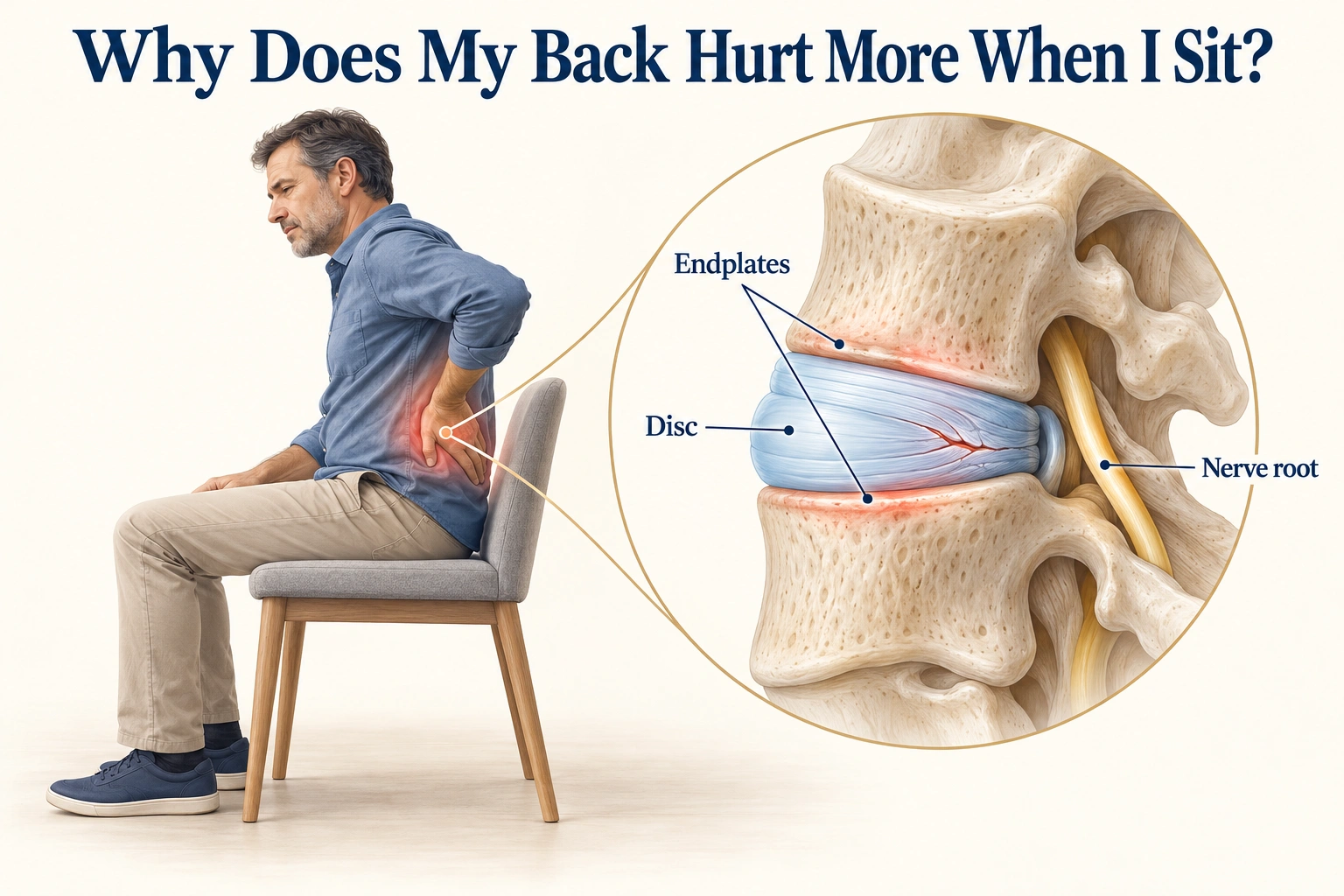
A long drive or time at your desk can bring on back pain even when walking feels comfortable. Where you feel that pain helps narrow down the possible causes.
A deep ache in the middle of the lower back, especially with sitting and bending forward, can come from a sensitive disc or the vertebral endplates—the bone surfaces bordering the disc. These patterns overlap, so symptoms alone cannot reliably separate discogenic from vertebrogenic pain.
Pain that shoots into a leg, particularly with tingling or numbness, raises concern for irritation of a spinal nerve. A disc herniation is one possible cause. Back pain without leg symptoms is less suggestive of sciatica.
An ache that builds after staying in one position may involve muscles and other supporting tissues. Pain toward one side of the pelvis or buttock may involve the sacroiliac joint, although an examination is needed to distinguish it from nearby structures.
Pain directly over the tailbone, especially on a hard chair or when rising, suggests a different problem: coccydynia. Hip or hamstring problems can also make sitting uncomfortable.
Try a supportive chair, keep your feet comfortably supported, and take short movement breaks. Choose a position that feels comfortable rather than holding yourself rigidly upright.
If sitting repeatedly limits your day, describe the location, timing, and any leg symptoms to your physician. New bladder or bowel changes or groin numbness require emergency assessment; new or worsening leg weakness needs urgent evaluation.