


Some people feel fine while sitting but develop back pain within minutes of standing. Others can walk only a short distance before needing to sit down. You may have noticed that leaning on a shopping cart makes walking easier.
There are several reasons this can happen.
When you stand upright, the small joints at the back of your spine, called facet joints, carry part of the load. If these joints are arthritic or irritated, standing for a long time may increase your pain.
Another common cause is lumbar spinal stenosis. This occurs when the space around the nerves in the lower back becomes narrow. Standing and walking can make that space even smaller, sometimes causing pain, heaviness, numbness, or weakness in the legs. Sitting or bending forward often helps.
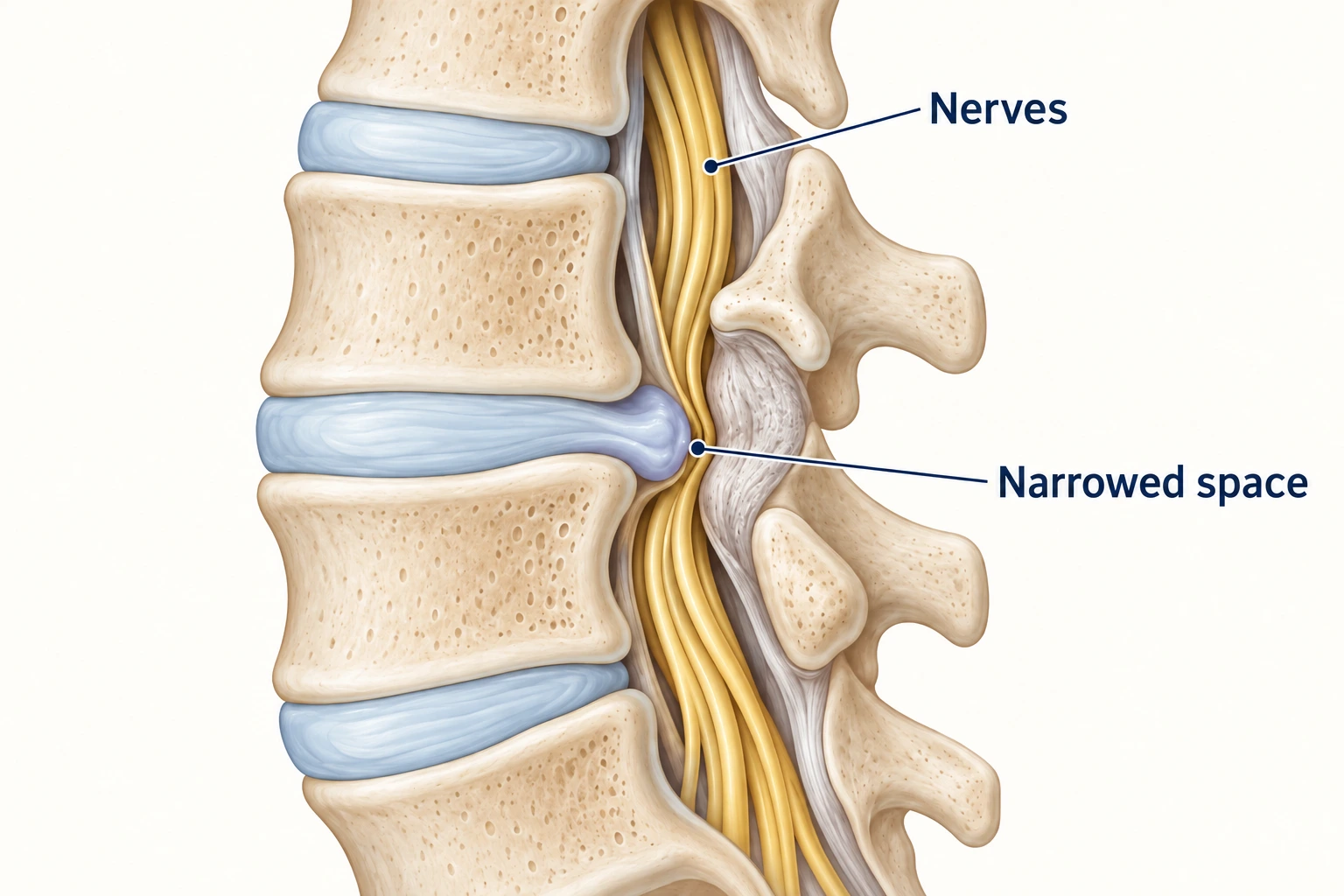
Muscles can play a role, too. Your back muscles work continuously to keep you upright. If they fatigue easily, standing may become uncomfortable even when imaging shows no major spinal abnormality.
Not everyone who develops pain while walking has a spine problem. Hip arthritis and poor circulation in the legs can produce similar complaints.
One detail I often ask patients about is what happens when they stop walking. Does the pain improve simply by standing still, or do they need to sit down or bend forward?
That distinction can offer an important clue about where the pain is coming from.