

When your back hurts at bedtime, finding a comfortable position can become a nightly challenge. There is no single position that works for everyone, but a few small adjustments may help.
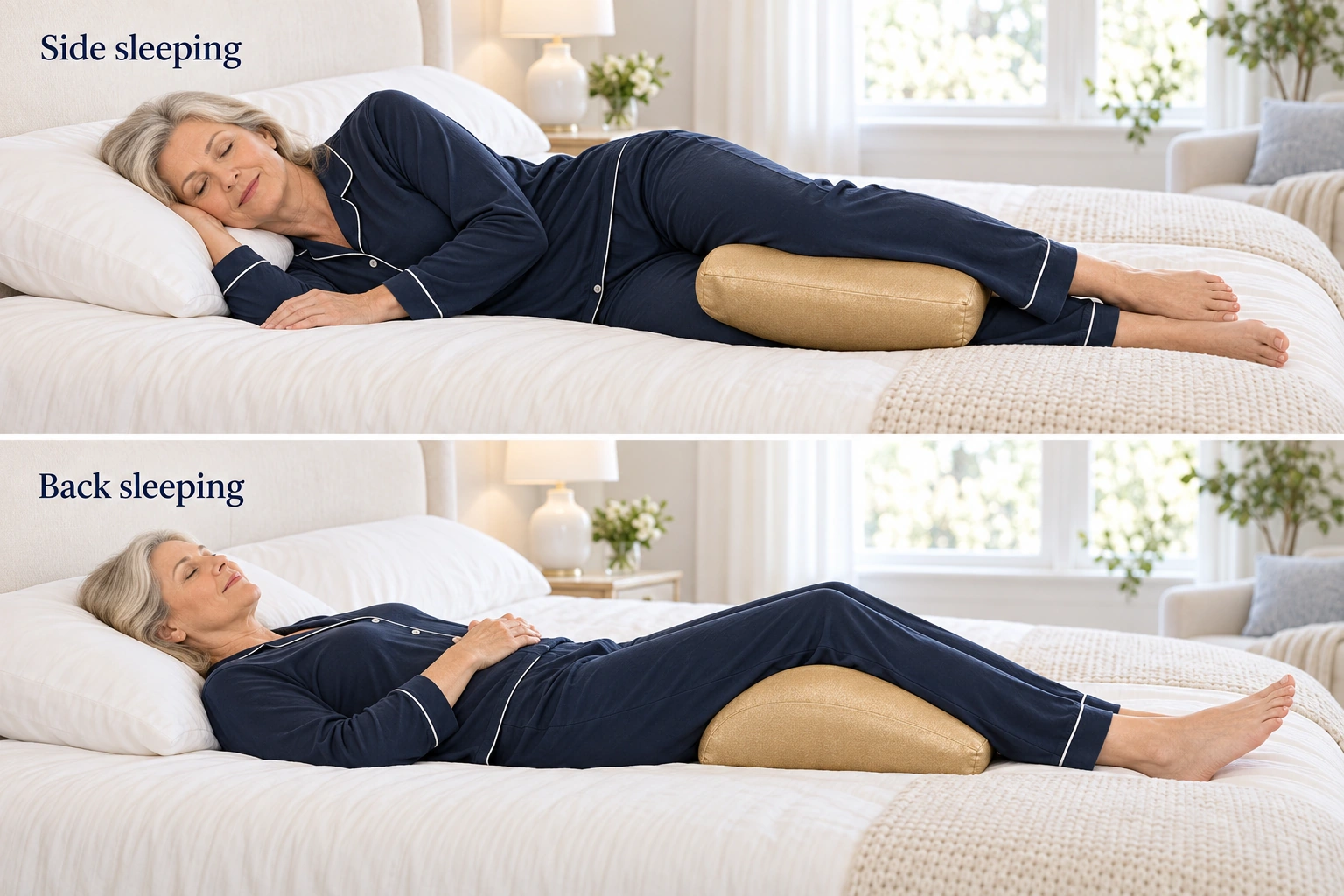
If you sleep on your side, bend your knees slightly and place a pillow between them. This supports your upper leg and may reduce twisting through your pelvis and lower back. You do not need to curl tightly into a ball.
If you prefer sleeping on your back, try a pillow under your knees. This can make the position more comfortable by easing strain on the lower back. Support your head without pushing your chin toward your chest.
Sleeping on your stomach may increase the arch in your lower back and keep your neck turned. If this is your preferred position, a thin pillow under your hips and lower abdomen may help. Let comfort guide you rather than forcing a position that keeps you awake.
These adjustments may ease discomfort, but they do not identify or treat the underlying cause. Follow any specific restrictions after a spine procedure or operation.
Tell your clinician if pain repeatedly interrupts sleep, keeps worsening, or does not ease with changing position—especially if you also have fever or unexplained weight loss.
Takeaway: Tonight, try one simple change: a pillow between your knees when lying on your side, or beneath them when lying on your back.
References and further reading
- Mayo Clinic. Sleeping positions that reduce back pain. Accessed October 27, 2026.
- NHS. Back pain. Accessed October 27, 2026.