

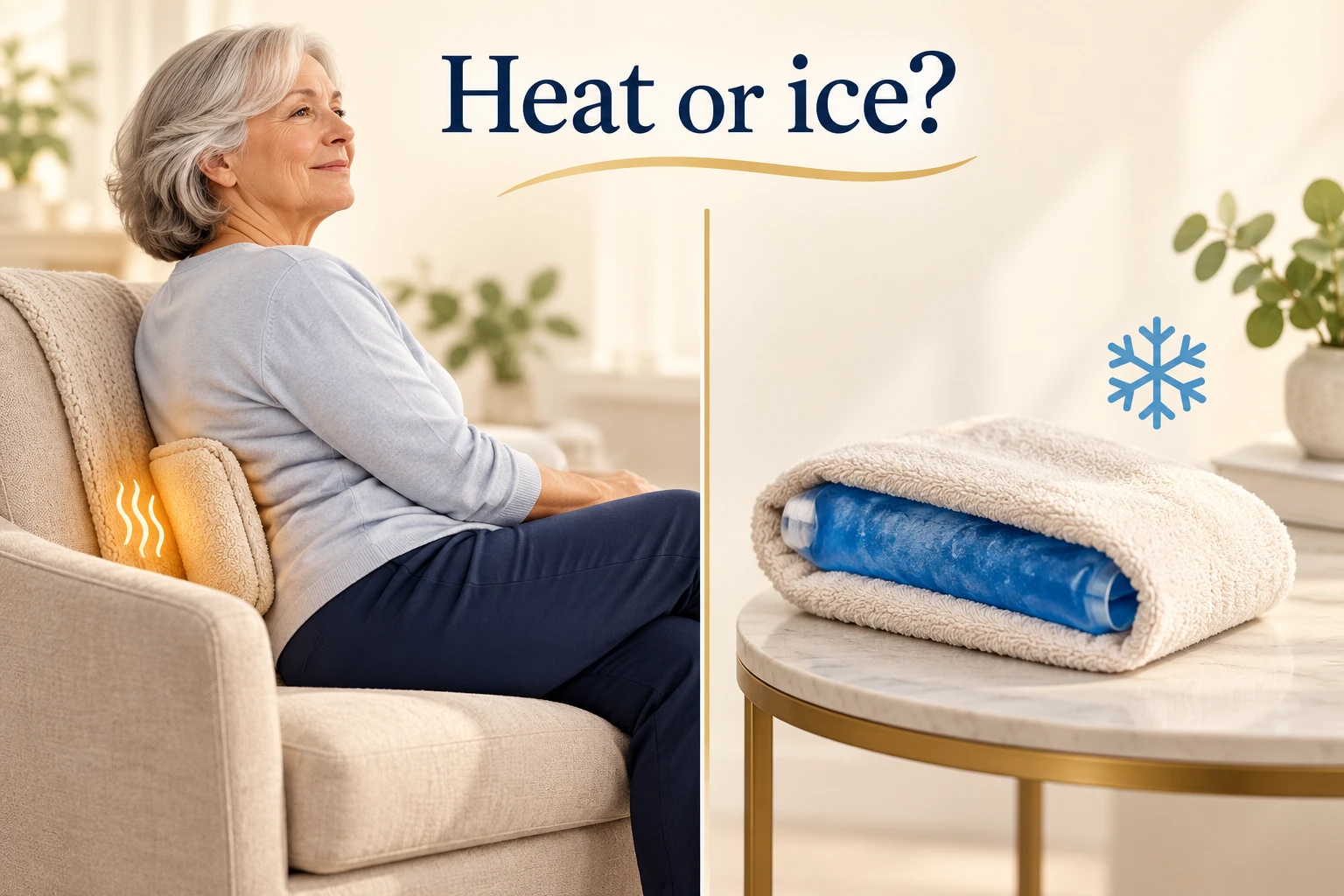
When your back aches, a heating pad or cold pack may make you more comfortable. Neither replaces an evaluation when one is needed, but either can be a useful part of managing a familiar flare.
Heat often feels better when the back is stiff or the muscles feel tight. Gentle warmth may make it easier to change position or begin a short walk. A cold pack may feel better when an area is sore after a minor strain, particularly if there is swelling.
There is no need to force yourself to use the one you dislike. Try a brief application and notice whether you feel more comfortable afterward. Relief from heat or cold does not tell us which spinal structure is causing the pain.
Protect your skin every time. Wrap the pack in a towel, use gentle warmth rather than strong heat, and limit an application to about 15–20 minutes. Check the skin during use and stop if it burns, becomes very red, or hurts more. Do not fall asleep with a pack in place.
If the area is numb, your circulation is poor, or the skin is damaged, ask your clinician before using either. Follow your procedure team’s instructions after an injection, surgery, or implant.
Use the comfortable interval to move gently rather than stay in bed. Seek medical assessment for persistent or worsening pain. New weakness, groin numbness, or bladder or bowel changes need urgent care.
A simple starting point: choose what feels soothing, protect your skin, and keep the application brief.
References
- NHS. Back pain. Accessed October 16, 2026.
- North Bristol NHS Trust. Your back and how to look after it. Accessed October 16, 2026.
- Berkshire Healthcare NHS Foundation Trust. Physiotherapy advice for low back pain. Accessed October 16, 2026.