

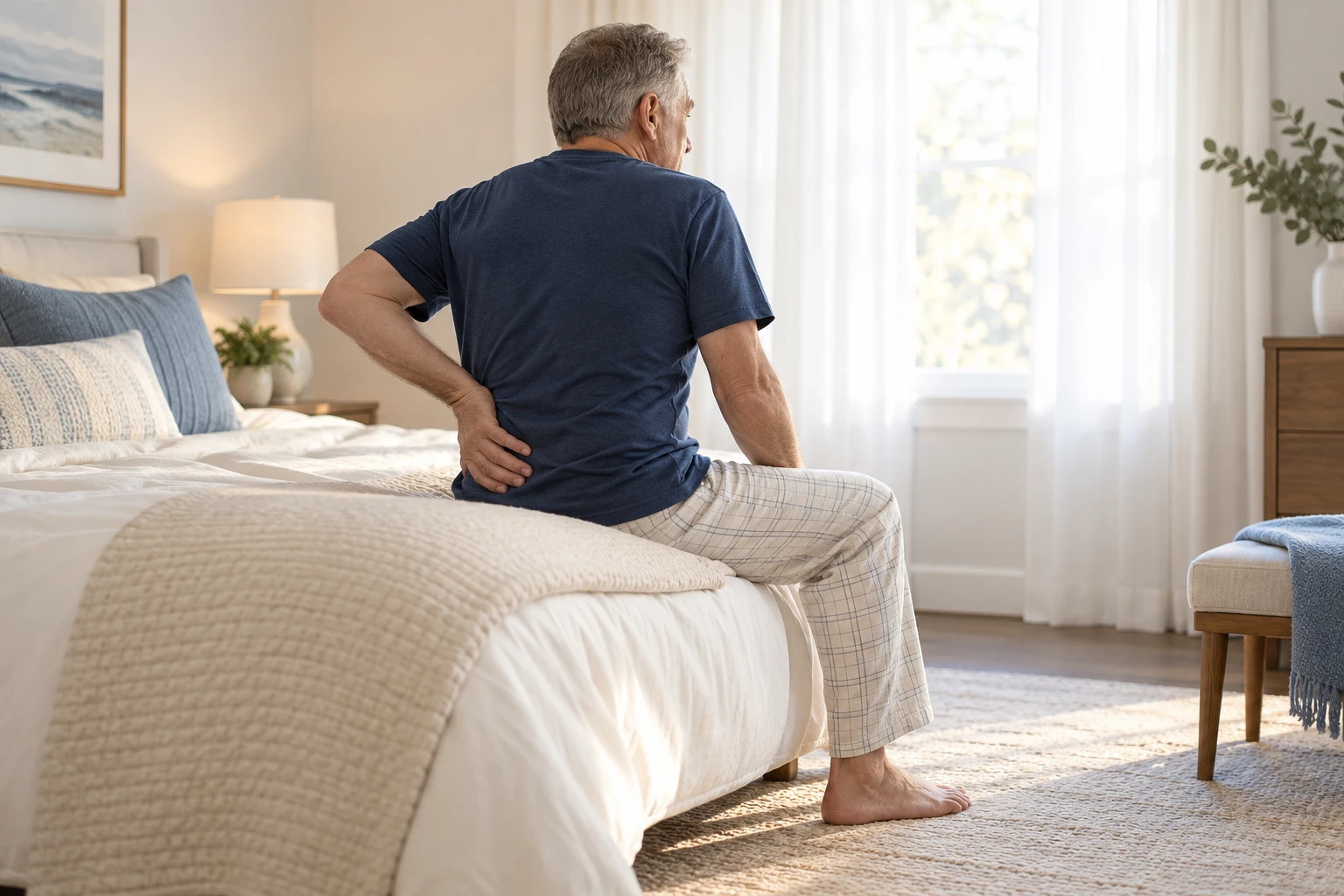
The first few steps out of bed can be uncomfortable. Your lower back may feel tight, standing upright may take a moment, or you may need to walk around before moving comfortably.
Morning stiffness is a recognized pattern of back pain. Several structures—including muscles, spinal joints, and discs—can contribute, and the time of day alone cannot identify the source. How long the stiffness lasts and what happens as you move provide useful clues. [1]
Why might sleep affect your back?
Spending several hours in one position may make an already sensitive back uncomfortable. Sleep position and support can also influence symptoms. If you sleep on your side, try a pillow between your knees. If you sleep on your back, a pillow beneath your knees may help you feel more comfortable. Adjust one thing at a time so you can judge whether it helps. [2]
What can make getting up easier?
If sitting straight up hurts, try rolling onto your side, bringing your legs over the edge of the bed, and using your arms to push into a sitting position. Pause briefly before standing. This is an option for comfort, rather than a movement rule everyone must follow. [3]
Once upright, begin with a short, comfortable walk. Gentle activity and a gradual return to your usual routine are generally encouraged. Avoid forcing a stretch that increases pain; a physical therapist can help choose movements suited to your symptoms. [4]
When does morning stiffness need closer attention?
Tell your clinician if stiffness is prolonged, pain repeatedly interrupts sleep, or symptoms improve with activity but return during rest. This pattern can occur with inflammatory spinal arthritis, particularly when symptoms began before age 45 or accompany psoriasis, inflammatory bowel disease, or eye inflammation. These clues warrant assessment; they do not establish a diagnosis. [5]
Arrange an evaluation if morning pain keeps recurring, limits daily activities, or fails to improve over several weeks. Seek prompt assessment for pain accompanied by fever, unexplained weight loss, or a recent injury. New bowel or bladder dysfunction or progressive leg weakness requires emergency assessment. [1, 6]
Before your visit, note how long it takes to loosen up, whether walking helps, and whether pain travels into a leg. Those details help your clinician decide what to examine and whether testing is needed.
References and further reading
- NIH–NIAMS: Back pain—symptoms and causes.
- Mayo Clinic: Sleeping positions that reduce back pain.
- Wirral Community Health and Care NHS: Lower back pain—getting out of bed.
- NIH–NIAMS: Back pain—diagnosis, treatment, and steps to take.
- NIH–NIAMS: Ankylosing spondylitis.
- NIH–MedlinePlus: Acute low back pain.