

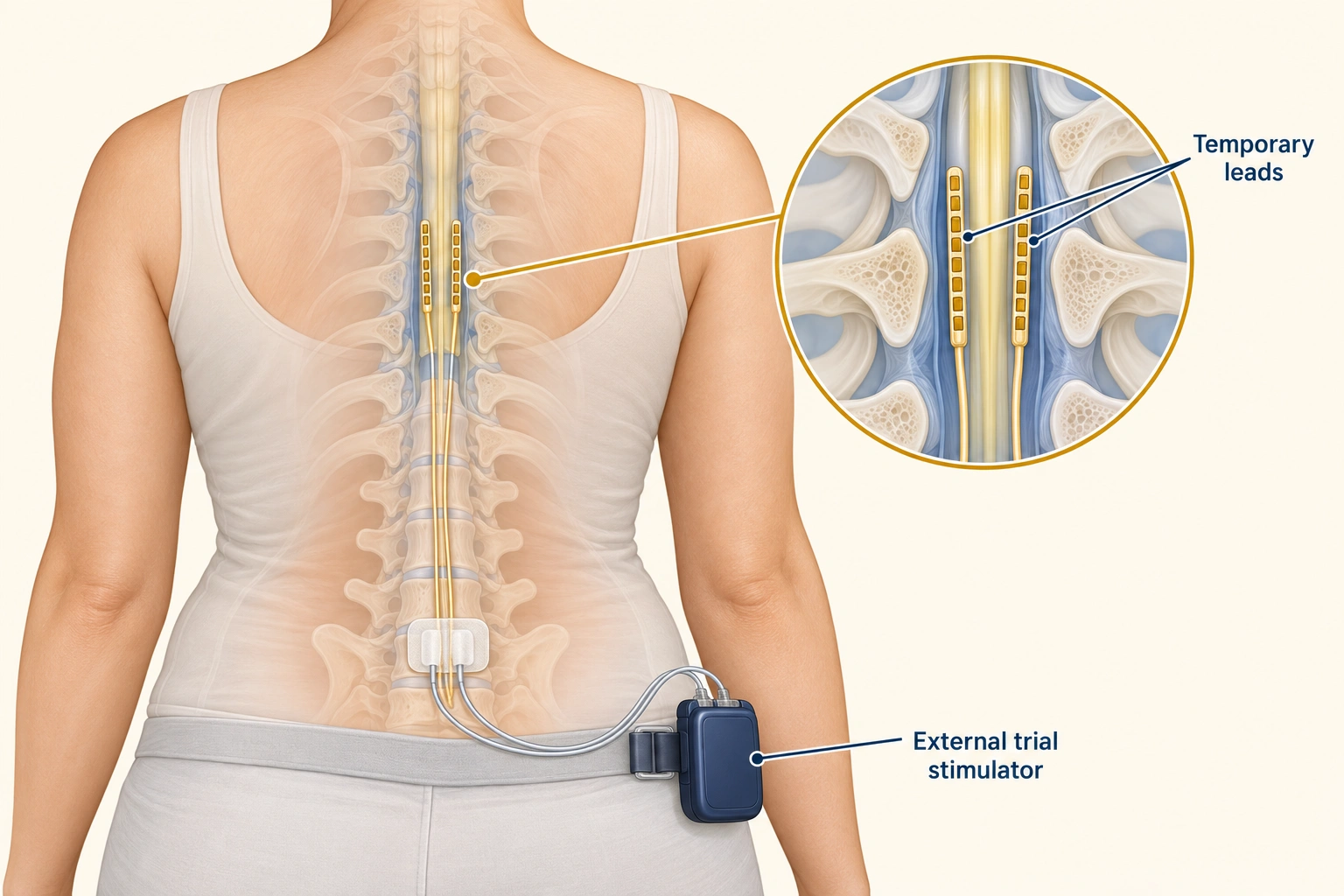
Before deciding on an implanted spinal cord stimulator, you usually have a short trial. It gives you a chance to find out whether stimulation helps your pain enough to consider a longer-term device.
During a typical trial, thin temporary wires called leads are placed in the epidural space, outside the spinal cord. They connect to a small stimulator worn outside your body. You generally go home with the system for several days, then return to have the temporary leads removed.
The most useful question is not simply, “Did my pain score drop?” Could you stand long enough to prepare breakfast? Was sitting through a meal easier? Did pain interrupt your sleep less often? Choose a few goals beforehand so you have something concrete to compare.
Pain relief of about 50% or more is commonly used when judging success. Your clinician also considers changes in function, medication use, comfort with stimulation, and your overall experience.
During the trial, follow your team’s restrictions on bending, lifting, twisting, bathing, and activity. Keep the dressing dry, and contact the team promptly for fever, drainage, or increasing redness. New weakness requires urgent medical assessment.
A successful trial does not guarantee lasting relief after implantation. It provides useful information for a shared decision. If the benefit is small or the experience does not suit you, discuss other options.
Before your trial: Write down your usual pain level and two everyday activities you hope will become easier. Keep brief daily notes without pushing beyond your procedure team’s instructions.
References
Shanthanna H, et al. Evidence-based consensus guidelines on patient selection and trial stimulation for spinal cord stimulation therapy for chronic non-cancer pain. Regional Anesthesia & Pain Medicine. 2023;48:273–287. PubMed · Full guideline. Accessed October 20, 2026.