

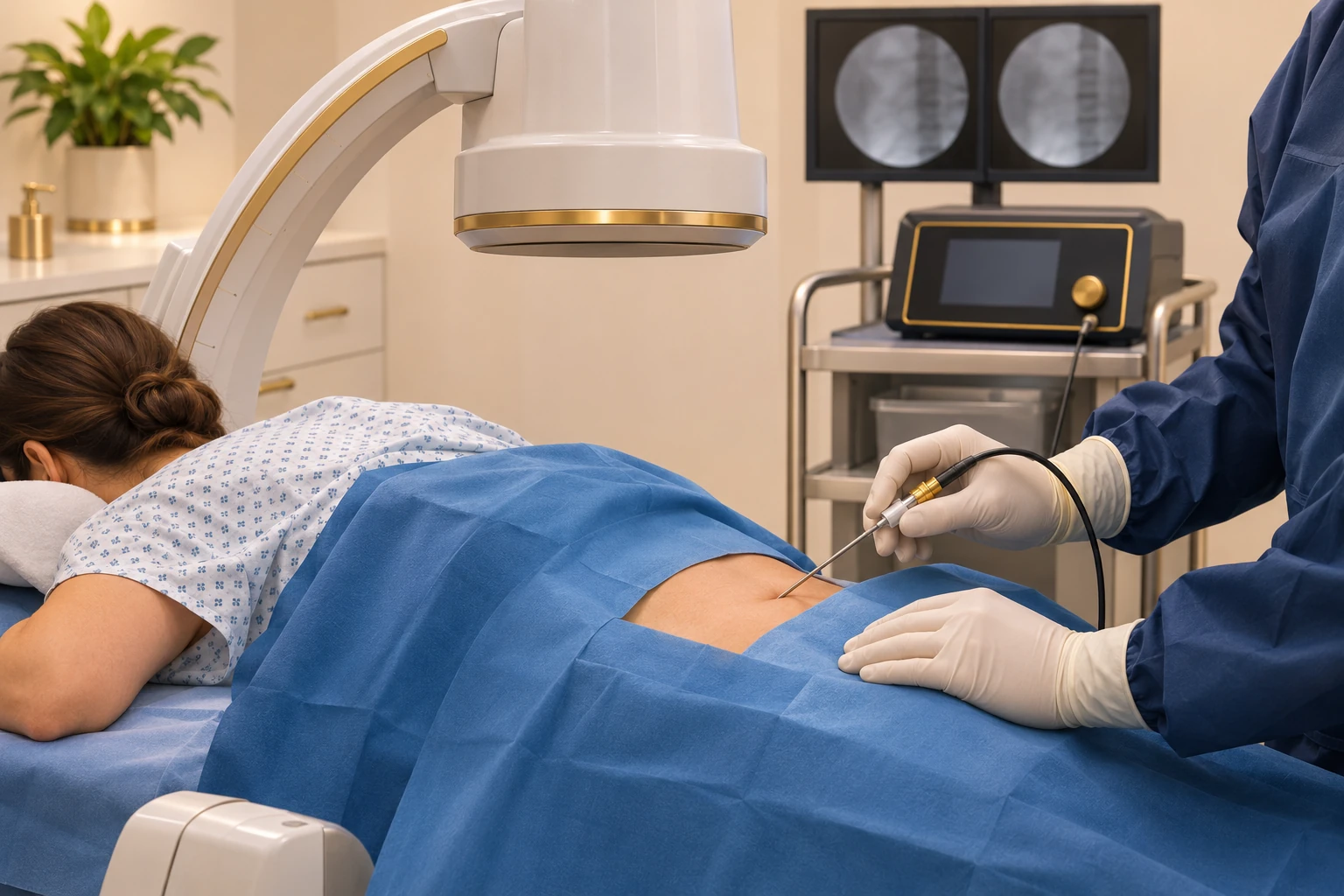
You had a procedure to ease your back pain. The next morning, the treated area feels tender—and you wonder whether it worked.
Some soreness after radiofrequency ablation, or RFA, can happen. The first few days may be too early to judge the result.
For facet joint pain, RFA uses controlled heat to interrupt pain signals carried by small medial branch nerves. These nerves serve the small joints at the back of your spine. Needle placement and treatment can leave temporary discomfort around the treated area.[1,2]
The recovery timeline varies. Some people notice relief quickly. Others need several weeks. Cleveland Clinic reports that soreness or burning discomfort can last one to two weeks, while pain relief may take up to three weeks to develop. Temporary soreness alone does not establish whether the procedure succeeded or failed.[3]
Follow your care team’s instructions about activity, medicines, and caring for the needle sites. If recommended, an ice pack wrapped in cloth may help local soreness. Keep a simple record of your pain and everyday activities so you can discuss your recovery at follow-up.[1,3]
As recovery progresses, notice practical changes. Is getting dressed easier? Can you stand comfortably for longer? Does your usual back pain interrupt fewer activities?
Contact your care team promptly for severe or increasing pain, redness or swelling at the needle sites, or new or worsening arm or leg weakness or numbness. These symptoms need assessment.[3]
Give recovery time, and stay in touch with your treating team.
References and further reading
- National Library of Medicine / NIH. MedlinePlus. Radiofrequency ablation for chronic pain. Accessed November 14, 2026.
- StatPearls. Radiofrequency Ablation. NCBI Bookshelf, hosted by the National Library of Medicine / NIH. Accessed November 14, 2026.
- Cleveland Clinic. Radiofrequency Ablation (RFA). Accessed November 14, 2026.