

A spinal compression fracture occurs when a vertebral body—the main weight-bearing portion of a spinal bone—collapses. Osteoporosis is a common cause. Pain may begin after a fall, lifting, or an ordinary movement. Standing, walking, and getting out of bed can become difficult.
Many fractures improve with appropriate pain control, activity modification, selective bracing, and gradual rehabilitation. When pain remains severe or prevents basic mobility, a minimally invasive procedure may be considered. The first step is confirming that the fracture is responsible for the pain. Examination and imaging, often including MRI, help distinguish an active fracture from an older, healed deformity.
How balloon kyphoplasty works
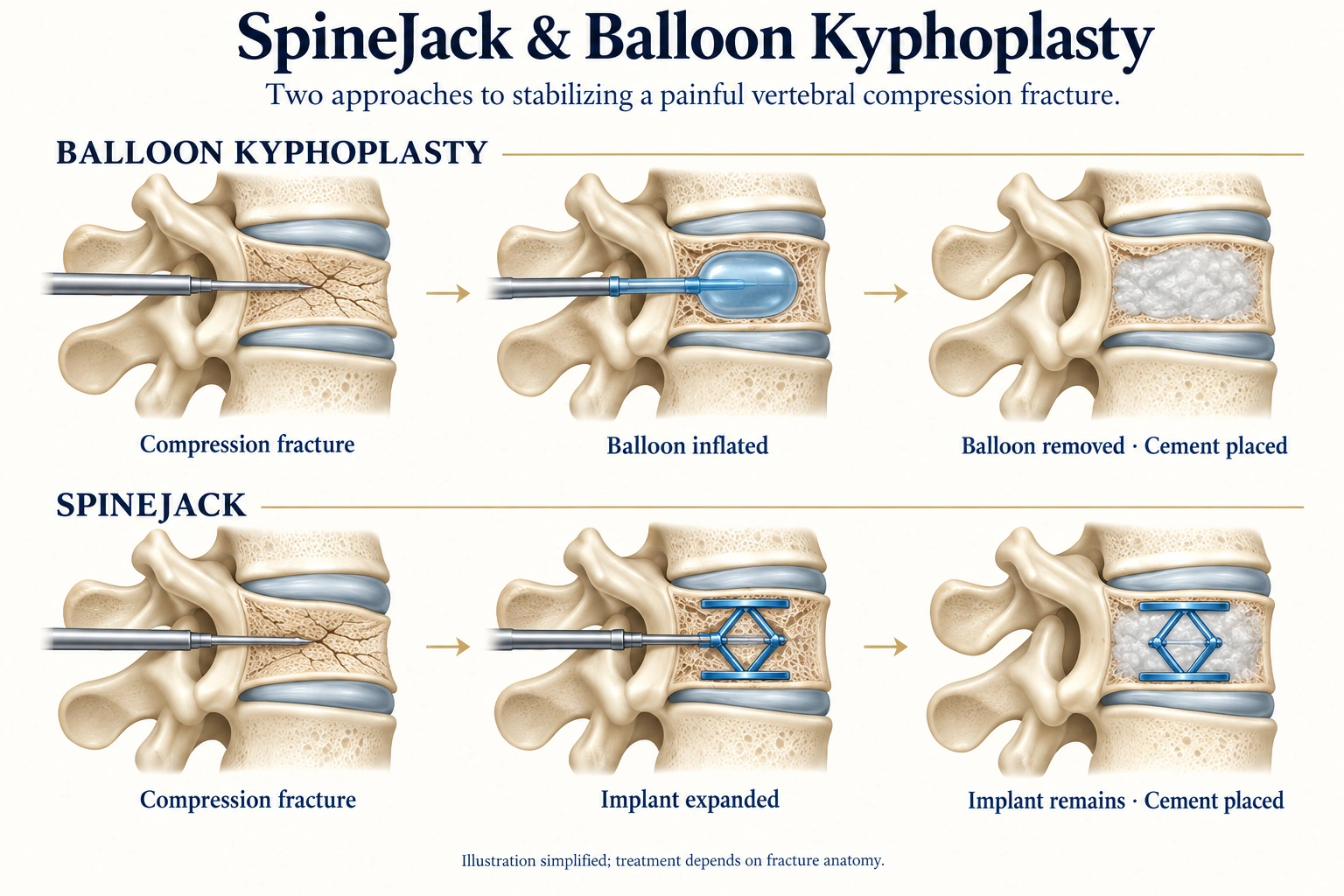
Through a small skin opening, the physician guides an instrument into the fractured vertebra using real-time X-ray imaging. A balloon is inflated inside the bone to create a cavity and, when possible, recover some lost height. The balloon is then deflated and removed. Bone cement fills the cavity and hardens to stabilize the fracture.
How SpineJack differs
SpineJack uses expandable titanium implants placed inside the vertebral body. These implants expand vertically to help lift the compressed bone and support the restored position. Cement is then injected around them. Unlike the kyphoplasty balloon, the implants remain permanently inside the vertebra.
Is one approach better?
Both approaches can reduce fracture-related pain in appropriately selected patients. A randomized study comparing SpineJack with balloon kyphoplasty found comparable overall clinical effectiveness, with advantages for SpineJack in certain measures, including maintenance of vertebral height. That does not make it the best choice for every fracture. Fracture shape, age, bone quality, and procedural risks all influence the decision.
Neither procedure guarantees complete pain relief or restoration of normal vertebral height. Risks include cement leakage, bleeding, infection, and nerve injury; rarely, cement can travel to the lungs. Some fractures require a different treatment approach.
After either procedure, bone health still needs attention. Osteoporosis evaluation and treatment, adequate nutrition, fall prevention, and an individualized rehabilitation plan help address the risk of future fractures. Stabilizing one painful vertebra is only one part of helping a person move safely and regain confidence in daily activities.
References
- Noriega D, et al. SAKOS study. Spine J. 2019;19:1782–1795. doi:10.1016/j.spinee.2019.07.009.
- Wardlaw D, et al. Balloon kyphoplasty versus nonsurgical care (FREE). Lancet. 2009;373:1016–1024. PMID: 19246088.
- MedlinePlus: Kyphoplasty. Reviewed September 2025.